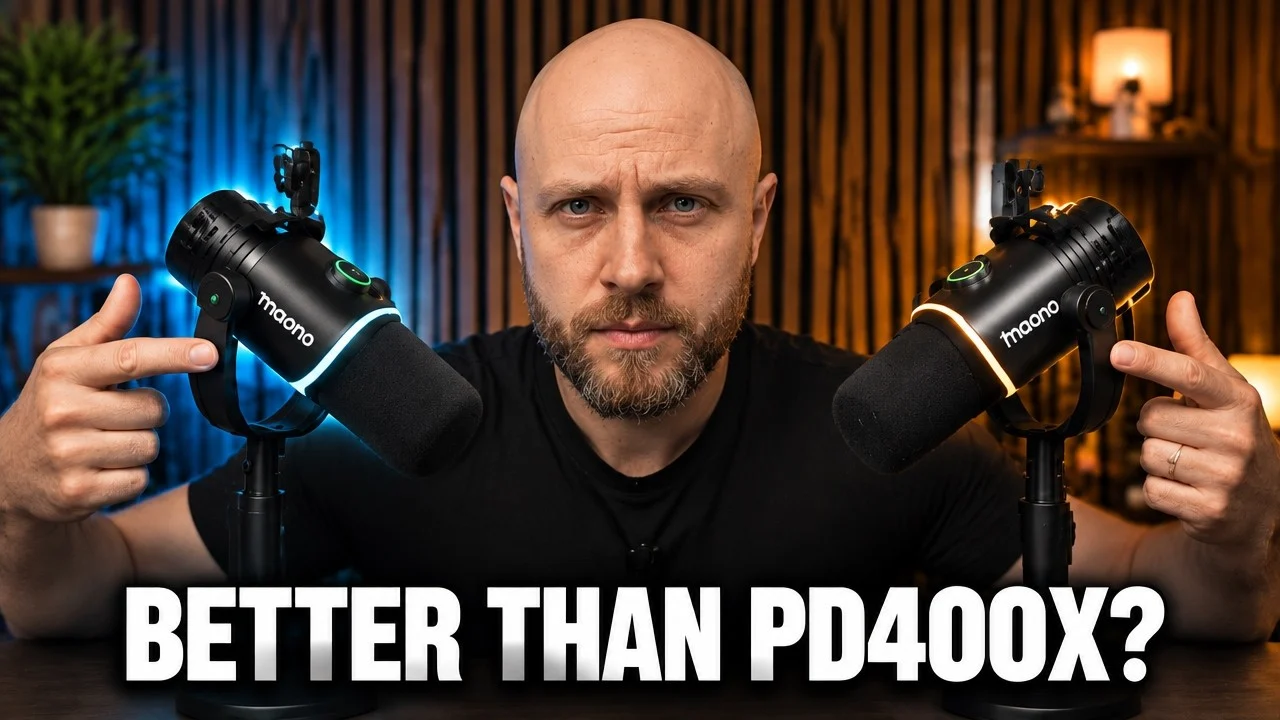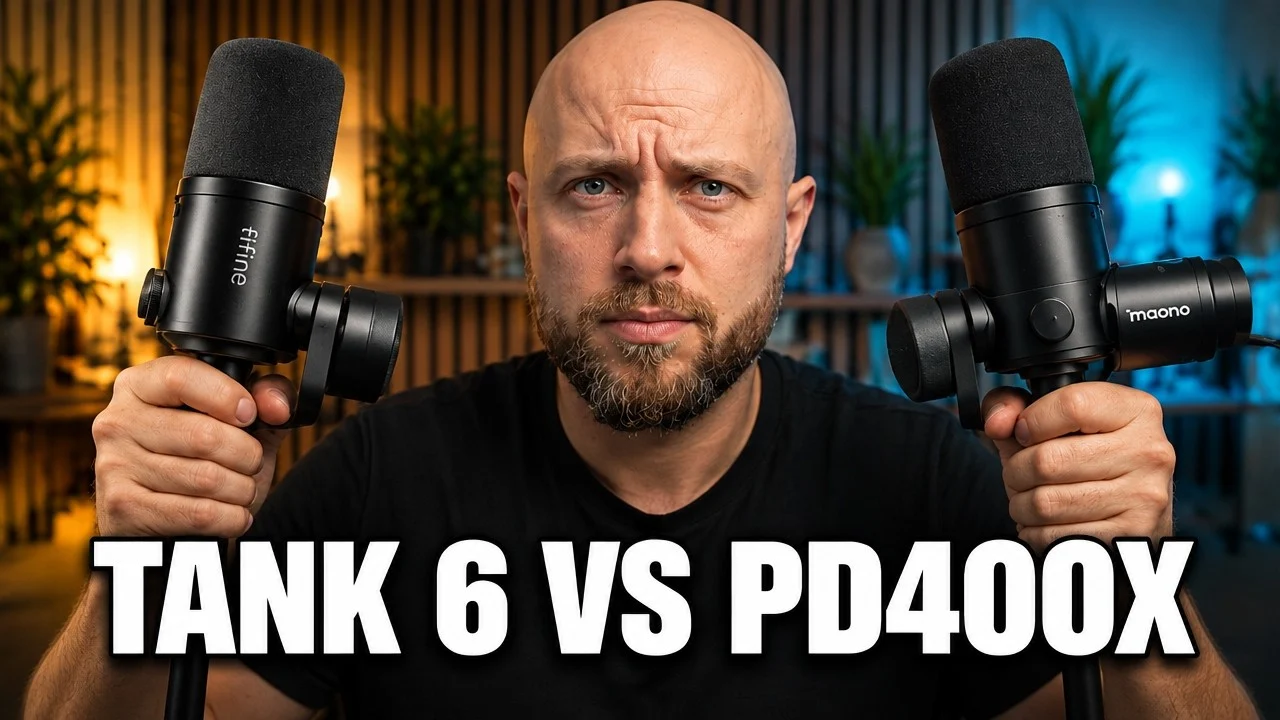
Premium build and studio-ready sound at a budget price. The trade-offs are a bare-bones bundle and the need for proper mounting and a good preamp for XLR.
- Heavy, durable metal build
- Studio-ready voice with a built-in high-pass and presence boost
- Headphone and mic knobs in USB mode
- Physical mute button
- Strong cardioid pattern keeps background noise down
- Only the mic and a USB cable in the box
- The knobs need USB power and do nothing on XLR alone
- XLR sound depends on your preamp
- Heavy: cheap boom arms sag
- No software for EQ or presets
I got my hands on the Fifine Tank 6 and the first thing that hit me was the weight. This is not another plastic USB mic. It is almost a kilo of solid metal and it genuinely feels like a tank. That heft is not just for show; it contributes to the overall sound quality of the Fifine Amplitank Tank 6. It packs a thoughtful set of design choices and a sound profile that makes it punch well above its budget price.
In this review I break down unboxing, build, controls, audio performance in both USB and XLR, real-world tests, how it compares to a close competitor, and whether it deserves a spot on your desk.
Fifine Tank 6 specs at a glance
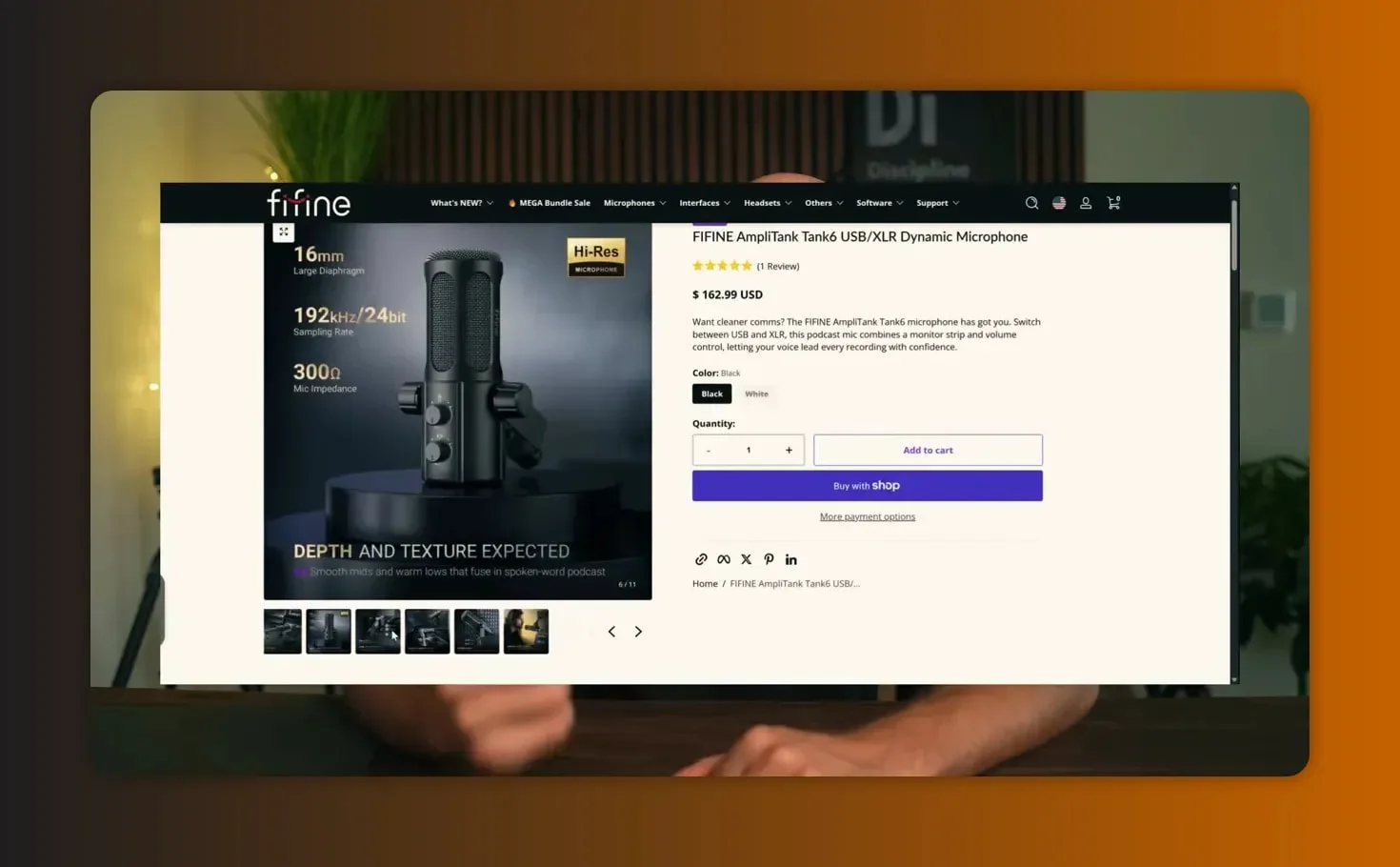
Type | Dynamic microphone with USB and XLR outputs |
Sample rate | Up to 192 kHz, as advertised by Fifine |
Frequency response | About 100 Hz to 18 kHz, with a presence bump at 2 to 4 kHz |
Controls | Two knobs: gain and headphone volume |
USB mode | Plug-and-play on Windows and Mac |
XLR mode | Sounds best with an interface that offers 55 to 60 dB of clean gain |
Software | No bundled software |
In the box | Microphone and USB cable |
Price at the time of review | Around $120 |
Quick overview: what the Fifine Tank 6 is and who it’s for
The Fifine Amplitank Tank 6 is a dynamic microphone available in XLR and USB configurations. It targets podcasters, streamers, content creators, and anyone who wants broadcast-style voice capture without spending a fortune. It promises studio-ready sound straight out of the box, a sturdy metal build, and a simple set of onboard controls for gain and monitoring.
Unboxing and first impressions
Out of the box the mic immediately communicates its intent. You get the mic body, a USB cable, and a basic mount. That’s it. The accessory list is intentionally sparse, which keeps the price down, but it also means you will likely need to buy a few extras to get started: a decent boom arm, a pop filter, and if you want XLR use, an audio interface or mixer.
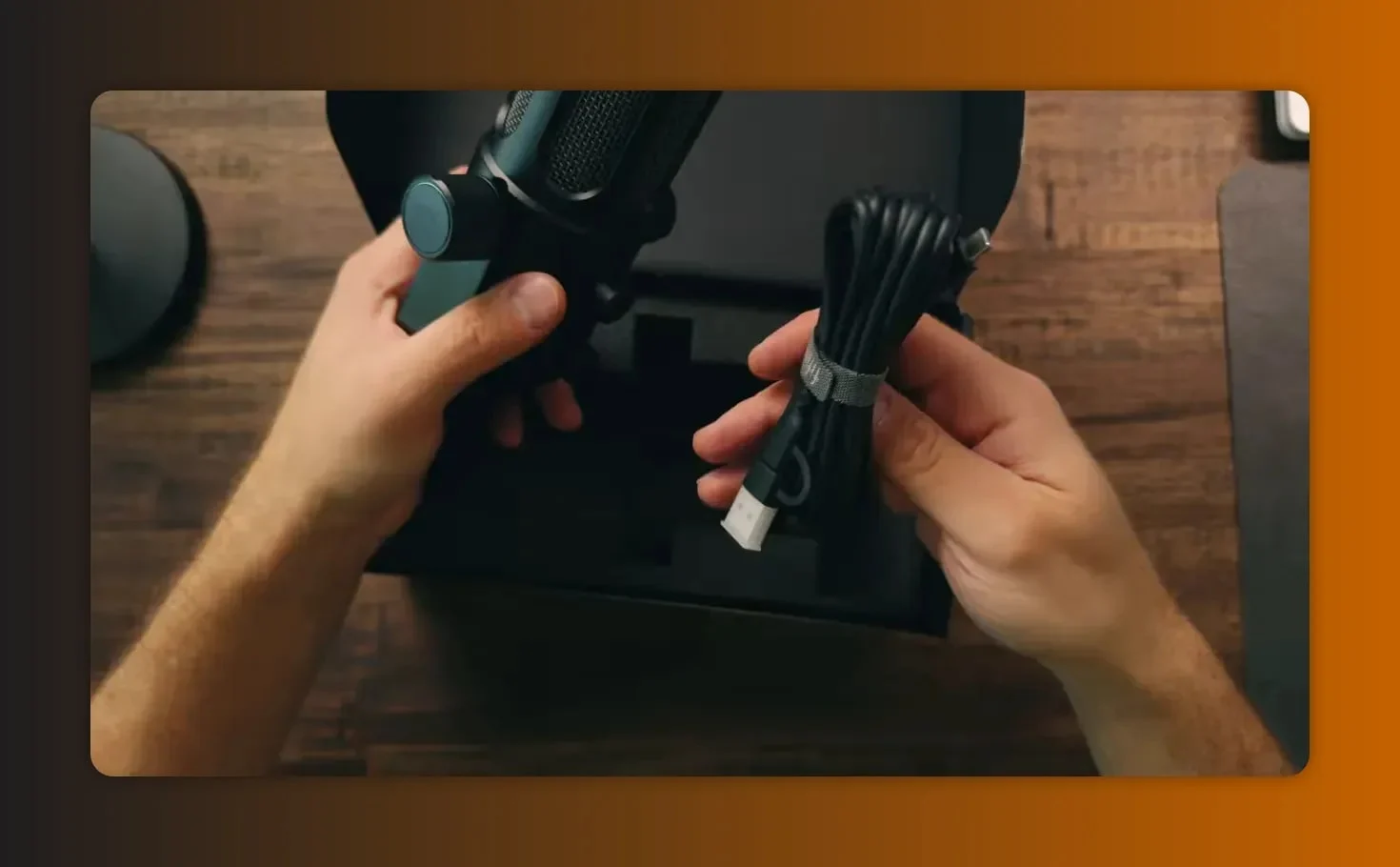
The included mount and plate are serviceable, but the mic’s weight means cheap clamps and inferior boom arms may sag or fail. Expect to spend a little more on mounting hardware than you would with lighter plastic mics.
Design and build: it’s literally built like a tank
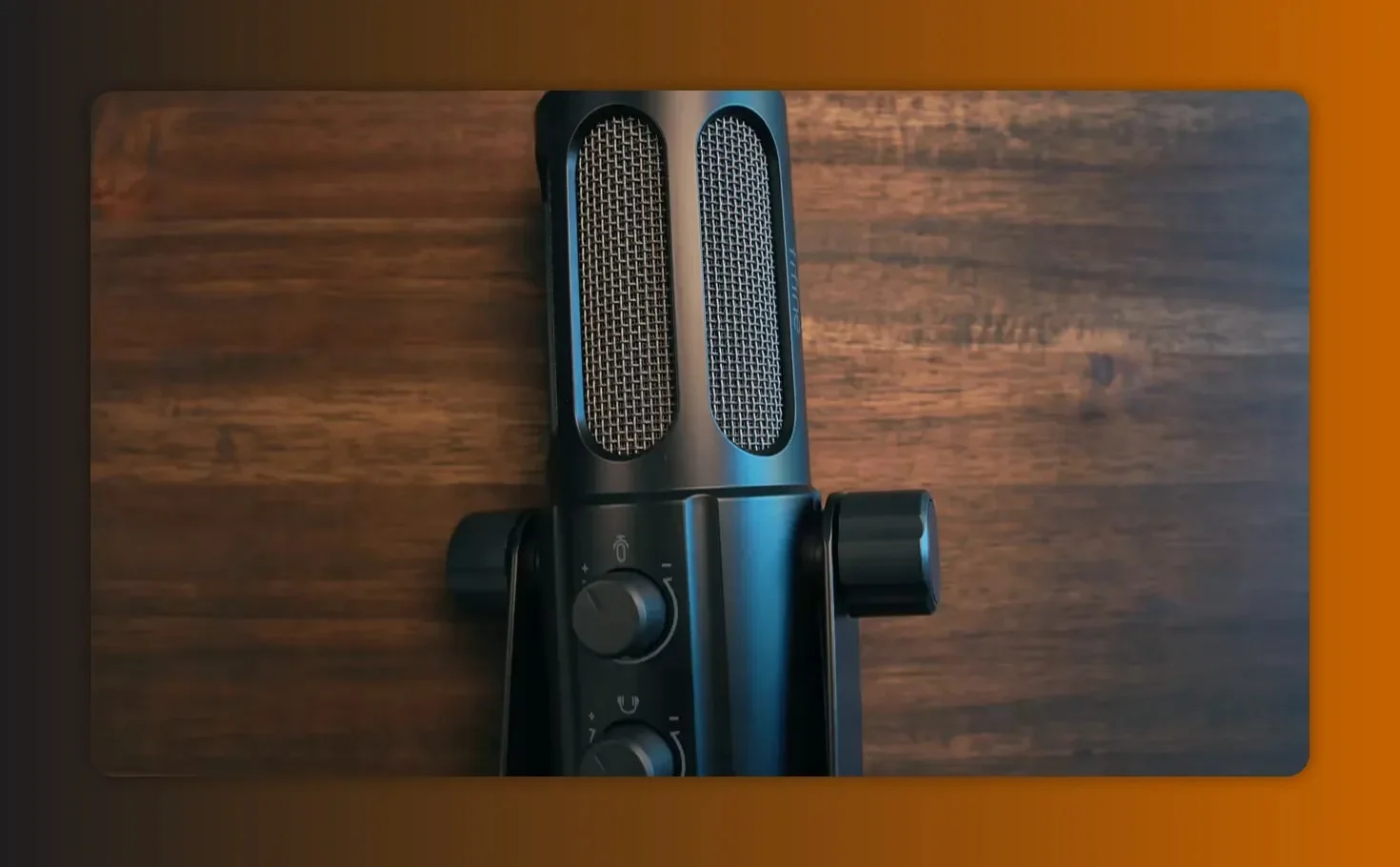
The Fifine Tank 6 is heavy in all the right ways. The metal chassis feels premium and robust. Compared to many competitors in the same price range, the Tank 6 looks and feels like a product that will last. The weight also helps with mechanical isolation: the mic doesn’t feel flimsy on accidental bumps, though table knocks will still transmit if your mount isn't up to the task.
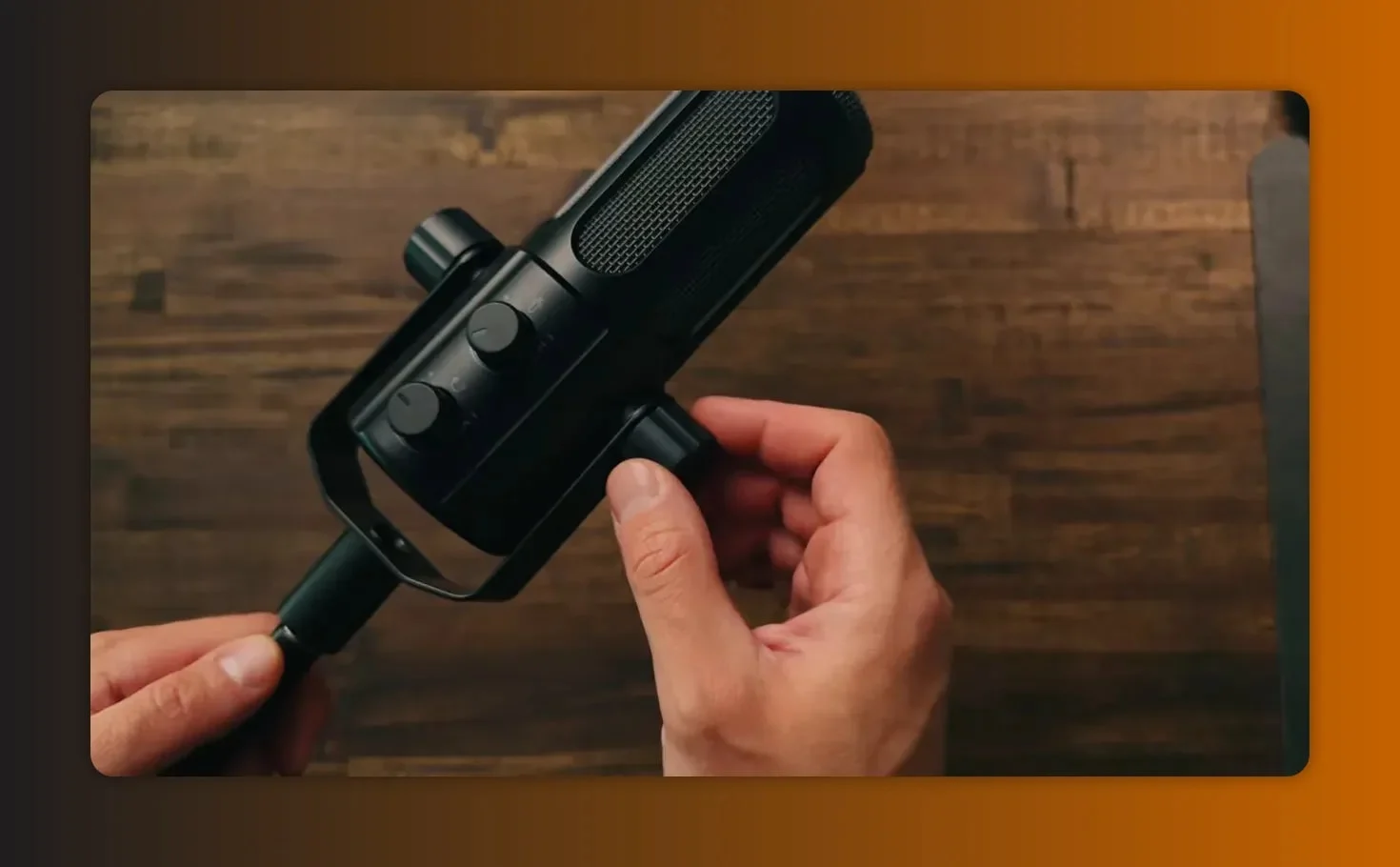
Controls are simple and sensible. The Tank 6 features two physical knobs for headphone volume and mic gain, making it a versatile choice for any channel. I prefer this dual-knob setup over single-knob designs that require double clicks to change functions. There’s also a physical mute button that’s responsive and satisfying to use. One important caveat: the knobs require USB power to function. If you use the mic in pure XLR mode without a USB feed, the knobs are inactive.
Specs and the sound signature
Fifine advertises up to 192 kHz support and a wider dynamic range compared to some rivals. The mic’s frequency response starts around 100 Hz, which naturally trims low-end rumble and handling noise, making it suitable for clear audio transcripts. There’s a presence bump around 2 to 4 kHz designed to help the voice cut through music or background noise without sounding harsh. High frequencies extend close to 18 kHz, which is unusually high for a dynamic mic and gives a near-condenser-like air on top.
What this translates to in practice is a voice that sounds full and present without demanding heavy equalization. The Tank 6 is tuned to deliver good results for voiceovers, streaming, podcasting, and video calls right away.
USB vs XLR: which sounds better?
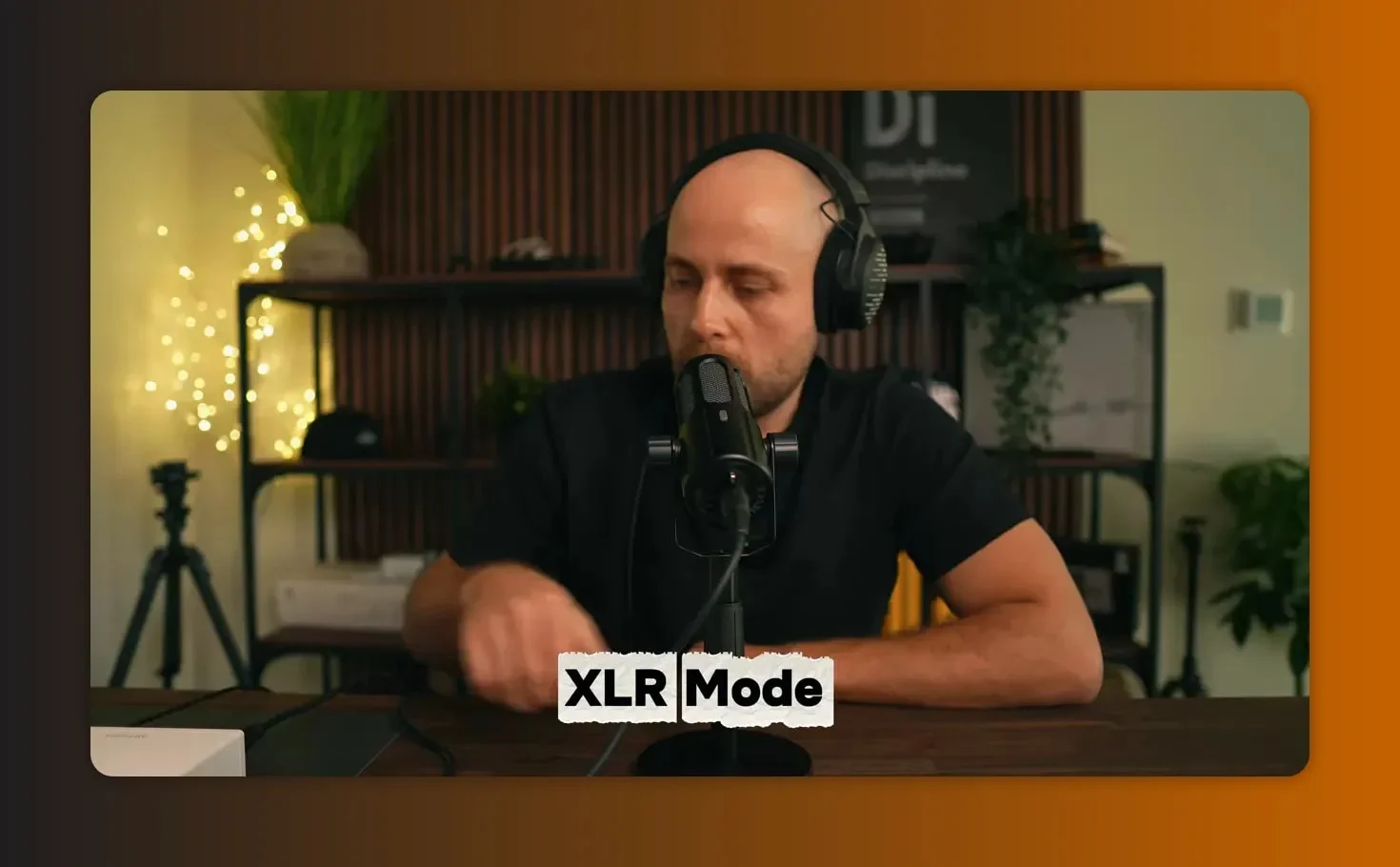
I tested the mic both via USB and XLR. The mic functions as plug-and-play in USB mode on Windows and Mac, and it will appear as an audio interface instantly. That makes it very convenient for quick setups. However, subtle differences showed when using XLR through a proper interface.
In my experience the Fifine Tank 6 The Tank 6 sounds a bit better in XLR mode when paired with an interface that offers clean gain (roughly 55 to 60 dB of gain) for professional audio applications. With a modern interface like the Arturia MiniFuse or newer Scarlett 3rd/4th gen units, the mic shines. Older, low-gain interfaces and low-end mixers often struggle to provide enough clean gain, which can make the mic sound thin or noisy.
Real-world tests
I ran several practical tests to evaluate plosive handling, sibilance, off-axis rejection, and mechanical isolation. Here are the highlights.
- Plosive test — The mic handled plosives well thanks to the natural low-frequency roll-off. Strong plosives still benefit from a pop filter, but you get less direct low-end blast than with many condenser mics.

- Sibilance — Sibilance was controlled. The presence boost around 2 to 4 kHz helps articulation without making sibilant sounds scream.

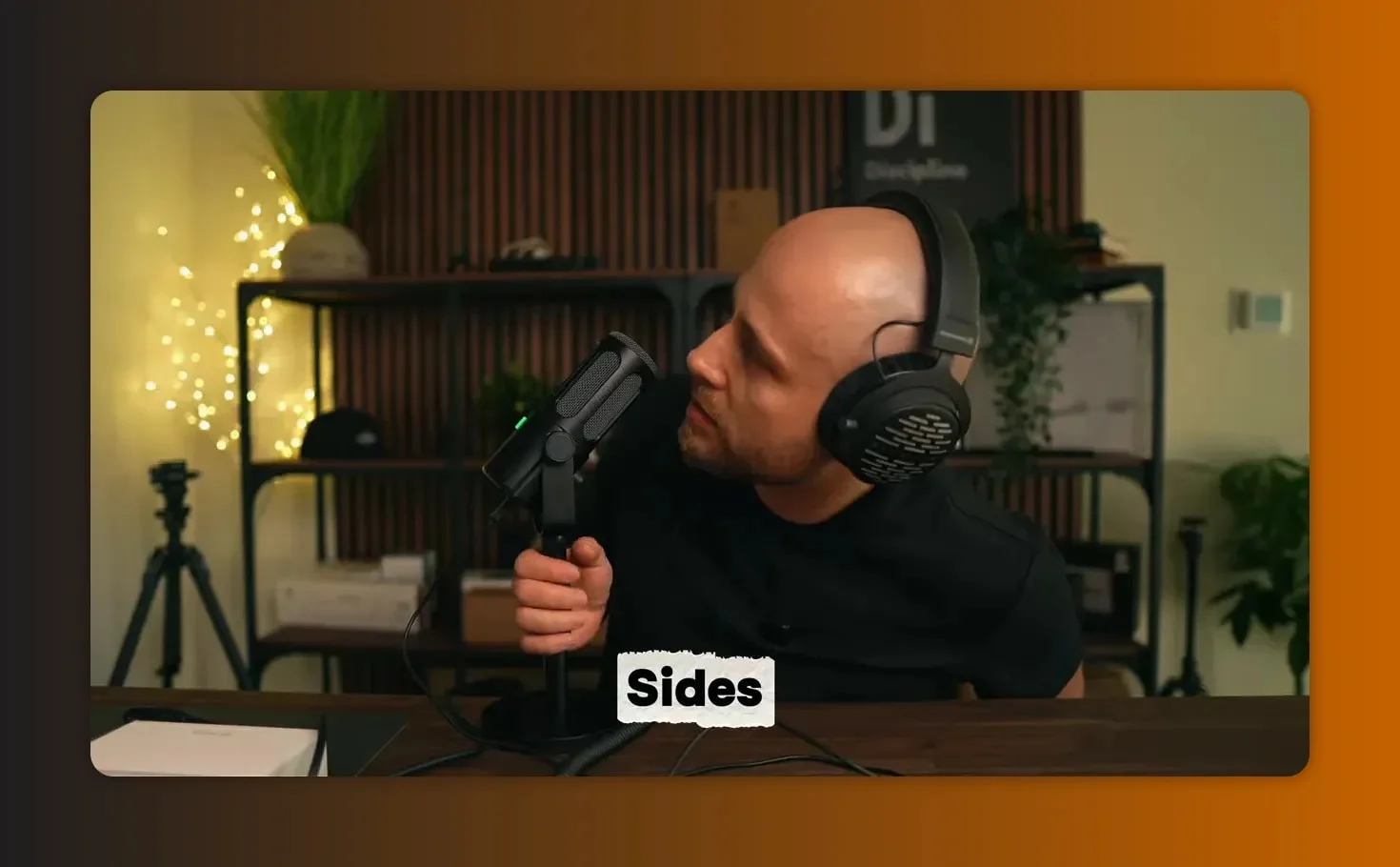
- Off-axis rejection — The cardioid pattern is strong. From side angles the mic falls off significantly, which helps isolate speaker voice in noisy environments. When speaking directly into the capsule the mic is loud and clear, but side-talkers are practically inaudible.
- Vibration and desk noise — The heavy body helps, but desk knocks and keyboard clacks still come through if the mic is mounted directly to a flimsy stand. A solid boom arm or shock mount is advisable.

Comparison: Fifine Tank 6 vs Maono PD400X
The Maono PD400X is a direct competitor in price and target audience. I’ve used both and here’s how they stack up.
Fifine Tank 6 | Maono PD400X | |
|---|---|---|
Build | Heavier metal body, more premium in hand | Lighter, less premium in hand |
Controls | Two dedicated knobs: gain and headphone volume | Single multi-function knob |
In the box | Mic and USB cable only | Stand, pop filter and XLR cable in some bundles |
Sound | A touch more refined: fuller low-mid, clean presence | Capable, a little less refined to my ear |
Better pick if | You want build and raw sound and will add a boom arm | You want an all-in-one kit out of the box |
- Build quality: The Tank 6 has noticeably heavier, metal construction. It feels more premium in hand than the PD400X.
- Controls: Tank 6 uses two dedicated knobs for gain and headphone volume, which I find more convenient than PD400X’s single multi-function knob.
- Accessories: PD400X typically ships with more accessories—an included stand, pop filter, and XLR cable in some bundles—while Tank 6 only includes the mic and USB cable. That means immediate additional expense with the Tank 6 if you need mounting hardware or a pop filter.
- Sound: Subjectively, the Tank 6 sounded a touch more refined to my ear, with a fuller low-mid and clean presence. Both mics are capable, but the Tank 6 leans more “broadcast” out of the box.
If you want an all-in-one out of the box, PD400X may save you money on accessories. If you prioritize build and slightly better raw sound—and are willing to buy a boom arm or shock mount—the Tank 6 is a stronger long-term buy.
Pros and cons
Pros
- Heavy, durable metal build feels premium and long-lasting.
- Studio-ready voice with a built-in high-pass and presence boost that reduce the need for heavy EQ.
- Two easy-to-use knobs for headphone and mic control in USB mode.
- Satisfying physical mute button for quick muting on calls or streams.
- Strong cardioid pattern keeps background noise under control in most home setups.
Cons
- Minimal accessories—you only get the mic and USB cable. Expect to spend an extra $40 or more on a boom arm, pop filter, and possibly an XLR cable.
- Knobs require USB power so in pure XLR setups without a USB feed they are inactive.
- XLR performance depends on your preamp. Low-gain interfaces struggle; a modern interface with clean gain is recommended.
- Weight requires robust mounting—cheap boom arms may sag or break under sustained use.
- No bundled software for customization if you prefer software-based EQ, presets, or processing.
Who should buy the Fifine Tank 6?
The Fifine Tank 6 is a great fit if you want a microphone that sounds great out of the box and feels built to last. It is ideal for professional use in various settings, including streaming and recording:
- Podcasters who want a broadcast-style voice without a huge investment.
- Streamers who need a microphone that cuts through music and in-game audio.
- Voiceover artists who want a natural, present tone with minimal post-processing.
- Anyone planning to use XLR with a quality interface that provides sufficient clean gain.
Avoid the Tank 6 if you want an out-of-box package with mounts, pop filters, and cables included, or if your setup relies on a very low-gain interface.
Price and value
At the time of writing the Tank 6 sits around $120 on major retailers. That is aggressive pricing for a metal-bodied dynamic mic with this sound signature. Factor in the cost of a proper boom arm, pop filter, and possibly an interface if you go XLR, and you are still likely under what you would pay for many higher-tier broadcast mics.
For the money, the balance between build, sound, and controls makes the Tank 6 one of the best options in its price bracket—provided you are prepared to buy the necessary accessories.
Practical setup tips
- Use a solid boom arm or desktop stand rated for heavier microphones. The weight rewards good hardware but punishes cheap clamps.
- If you plan XLR, pair the mic with an interface that provides 55 to 60 dB of clean gain. Modern Scarlett or Arturia MiniFuse units are good choices.
- Add a pop filter for plosive heavy scripts and if you’re close-miking for voiceover work.
- If you want onboard knob functionality, keep the USB connected even when using XLR. If you need a pure analog signal path, remember the knobs will be inactive with only XLR power.
Fifine Tank 6 vs Maono PD200W: If you want to move while recording, I also reviewed the Maono PD200W. It works over XLR, USB-C and 2.4 GHz wireless, while the Tank 6 is wired only. Read the Maono PD200W review.
Final verdict
The Fifine Tank 6 delivers a compelling mix of premium build and studio-ready sound at a budget-friendly price. Its strong cardioid pattern, presence boost, and extended highs let you skip heavy post-processing in many cases. The main trade-offs are the barebones accessory bundle and the requirement for quality mounting and preamp hardware if you want the best XLR performance.
I am keeping mine. If you need high-quality voiceovers, Zoom calls, streaming audio, or podcast audio and you’re comfortable buying a proper boom arm and possibly an interface, the Tank 6 is an excellent value. If you want everything included and a cheaper immediate setup, consider competitor packages—but for raw sound and build, the Tank 6 stands out.
FAQ
Does the Tank 6 work as plug-and-play USB?
Yes. The mic functions as a plug-and-play USB device on Windows and Mac. It will show up as an audio interface and let you monitor and record directly. However, the onboard knobs require USB power to function.
Can I use the knobs with only XLR connected?
No. The knobs are powered by USB. If you connect the mic via XLR alone with no USB power, the knobs will be inactive.
Is the fifine tank 6 better than the Maono PD400X?
It depends on professional priorities. The Tank 6 has a heavier metal build and slightly richer raw sound, while the PD400X often ships with more accessories. If you value build quality and sound and are willing to purchase mounting hardware, go Tank 6. If you want a ready-to-use bundle, PD400X might be more convenient.
Do I need an audio interface for XLR use?
Yes. For XLR use you need a preamp or audio interface. To get the best sound you should choose one that provides around 55 to 60 dB of clean gain. Low-gain or older interfaces might not give optimal performance.
What accessories should I buy?
At minimum, get a solid boom arm or desktop mount rated for heavier mics, and a pop filter. If you plan to use XLR, pick an interface with sufficient clean gain. A shock mount can help reduce desk vibration if you can find one compatible with the mic body.
Is it worth the price?
Yes, if you prioritize sound and build quality. The initial cost may be slightly higher once you add accessories, but the resulting setup will rival more expensive broadcast mics in clarity and durability.
Closing thoughts
The Fifine Tank 6 is a rare combination of metal build, useful onboard controls, and a voice-friendly tuning at a price that won’t break the bank. It asks you to invest a little more in mounting and possibly an interface, but if you do, it rewards with a consistently great vocal sound. If you want something that feels substantial and cuts through in mixes without hours of EQ, the Tank 6 is a smart buy.
Related reviews: Maono PD200W review and Elgato Prompter review.
Fifine Tank 6