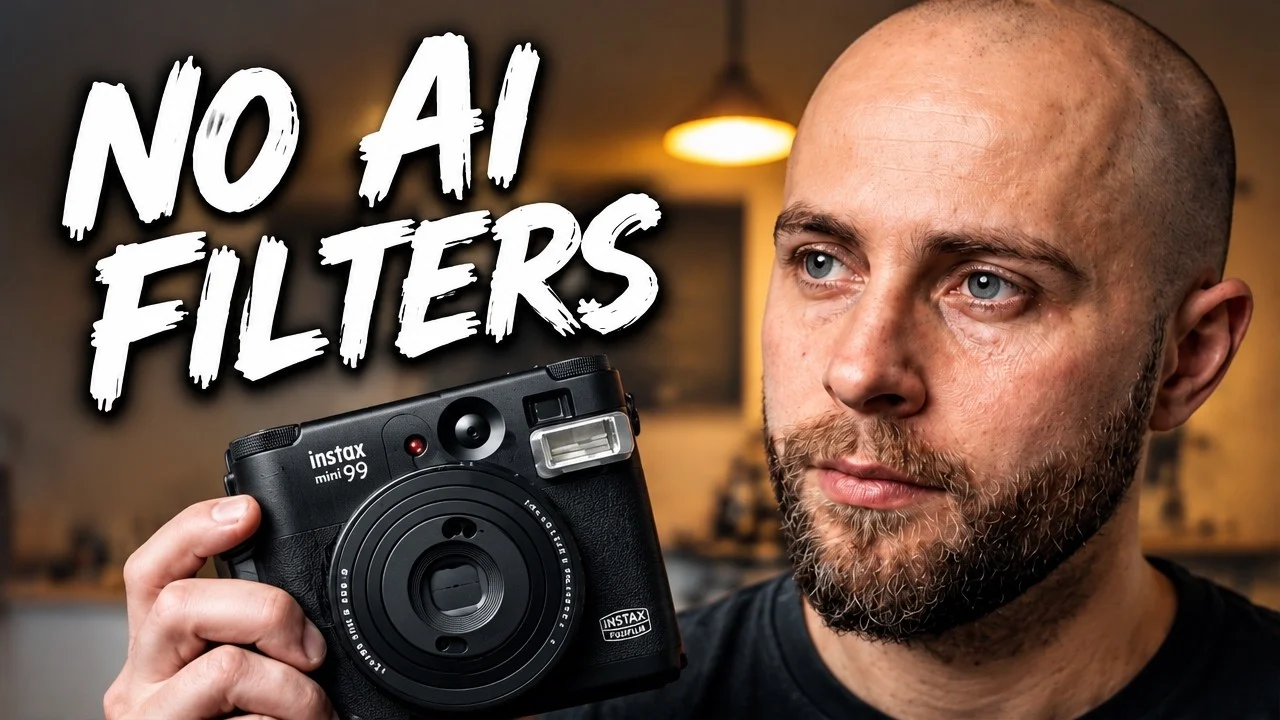
Not practical, not fast and not cheap to feed with film. But if you want tiny printed photos with real character, the Instax Mini 99 is a genuinely compelling option.
- Satisfying physical controls and dials
- Stronger build than lower-end Instax models
- Creative modes: macro, multi-shot, vignette, color effects
- Rechargeable battery
- Prints with real personality
- Film costs about a dollar per shot
- The camera itself isn't cheap
- Slower and less convenient than a phone
| Film | Instax Mini |
|---|---|
| Power | Rechargeable battery |
| Shooting modes | Landscape, macro, multi-shot |
| Creative controls | Brightness, vignette, color effects |
| Also | Flash control, self-timer |
| Cost per shot | About $1 (film) |
Alright, so let’s talk about the Instax Mini 99. Because honestly? This is one of those products that could’ve gone very wrong. Fujifilm could’ve taken a good instant camera idea, slapped on some pointless app features, added Bluetooth nobody asked for, and turned it into another overcomplicated gadget pretending to be fun.
Instead, the Instax Mini 99 goes in the opposite direction. It leans hard into what makes instant photography enjoyable in the first place: physical controls, real prints, a little unpredictability, and that tactile feeling you just do not get from taking 400 phone photos and forgetting all of them by tomorrow.
Where to buy: the Instax Mini 99 is on Amazon. There is also a bundle with accessories and the leather case I use.
This camera isn’t practical in the modern, efficiency-maximizing sense. It’s chunkier than a phone, slower than a phone, and every shot costs real money once film enters the equation. But that’s also exactly why the Instax Mini 99 stands out. It feels intentional. It feels like a camera you use because you want a specific experience, not because it’s the easiest option available.
If you’ve been thinking about buying one, here’s a grounded first look at what comes in the box, how the camera feels in hand, what controls you actually get, and whether the overall experience justifies the price.
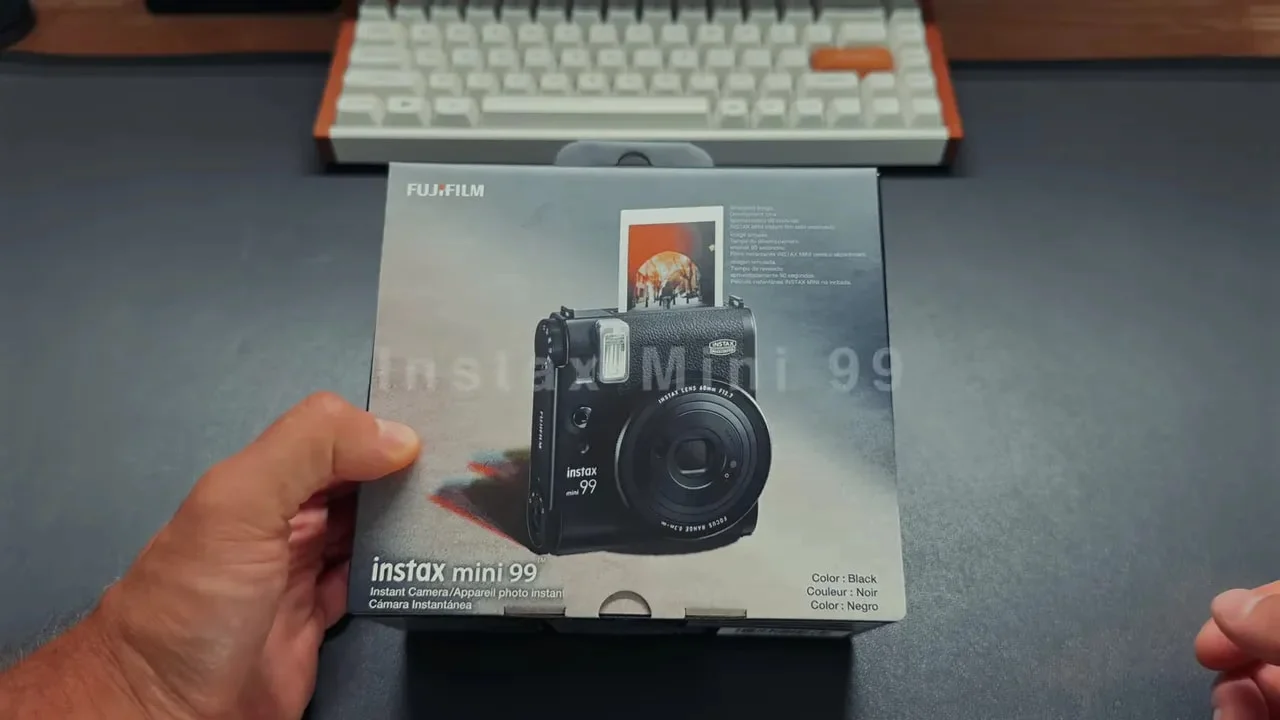
What the Instax Mini 99 is trying to be
The easiest way to understand the Instax Mini 99 is this: it’s Fujifilm’s more advanced take on the instant camera formula, but without turning it into a mini computer. That matters.
A lot of modern photo gear tries way too hard to become “smart.” This one doesn’t. The whole appeal here is that it gives you more control over how your instant photos look while still keeping the analog-style charm intact. You’re not buried in menus. You’re not depending on an app. You’re not faking a look afterward with filters.
You’re just using the camera.
And that’s the big selling point. The Instax Mini 99 is built for people who want actual character in their photos. Not hyper-processed skin smoothing. Not AI-enhanced weirdness. Not generic social-media gloss. Just small prints with a distinct feel and a more hands-on shooting process.
Unboxing: what comes in the box
The package contents are pretty straightforward, which I actually appreciate. No unnecessary fluff, no fake “premium” extras tossed in just to make the unboxing feel bigger than it is.
Inside the box, you get:
- The Instax Mini 99 camera
- A rechargeable battery
- A charging cable
- Printed documentation and user manual
- Included accessories for setup and handling
One notable detail is the power system. Lower-end or more basic Instax models often rely on standard replaceable batteries, but the Instax Mini 99 uses a dedicated rechargeable battery. That instantly makes it feel like a step up from the more toy-like entries in the lineup.
It also changes the ownership experience in a small but meaningful way. Rechargeable power just feels cleaner. More modern. Less disposable.
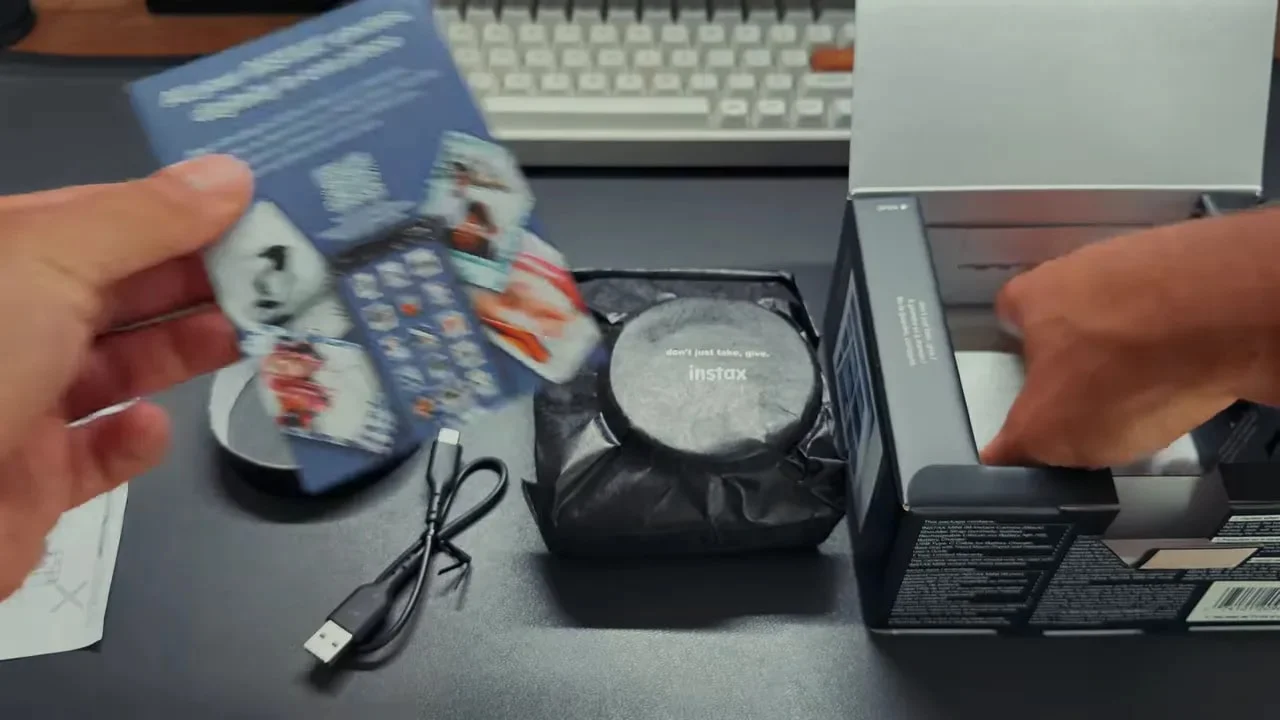
There’s also a practical point worth mentioning: it’s smart to spend a little time with the manual before loading up and shooting. The Instax Mini 99 clearly has more going on than the simplest point-and-shoot instant cameras, so a quick read can save wasted film later. And with instant film costing what it does, avoiding mistakes matters.
The controls are the real story
Here’s where the Instax Mini 99 starts separating itself from cheaper instant cameras.
This thing gives you a surprisingly sophisticated set of controls for an Instax model. Instead of reducing the experience to “press button, hope for the best,” Fujifilm gives you tools to shape the shot more deliberately.
The camera includes control over:
- Landscape mode
- Macro mode
- Multi-shot mode
- Flash control
- Self-timer
- Brightness adjustment
- Vignette effect
- Color effect settings
That’s a lot for an instant camera, and it changes the vibe completely. The Instax Mini 99 doesn’t feel like a throwaway novelty. It feels like a creative tool with some personality.
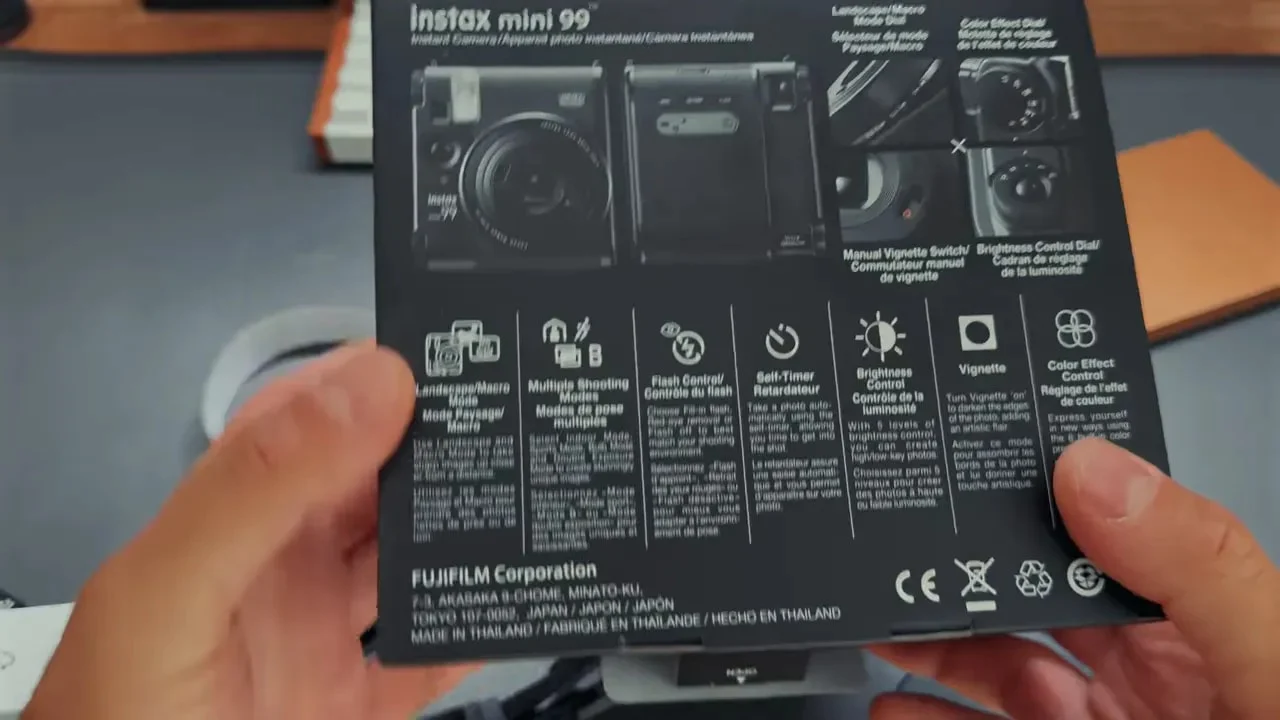
The most interesting part is how these features are presented. The camera uses physical controls and dials rather than burying everything behind software presets. That sounds like a small thing until you actually use gear like this. A real dial invites experimentation in a way a phone app just doesn’t. It slows you down in a good way.
Brightness control is especially important here. Having manual influence over exposure gives the Instax Mini 99 a more serious edge, because it means you’re not stuck fully surrendering the final result to automation.
The color effects matter too. These aren’t described as digital gimmicks layered on after the fact. They’re positioned as real, physical-style creative controls, which fits the whole identity of the camera. Same story with the vignette effect. On most devices, vignette would be a lazy filter. On the Instax Mini 99, it’s part of the image-making process.
Build quality: way better than the toy-camera feel
Now let’s get to the part that probably matters most when you first pick one up: the feel.
And yeah, this is where the Instax Mini 99 wins people over fast.
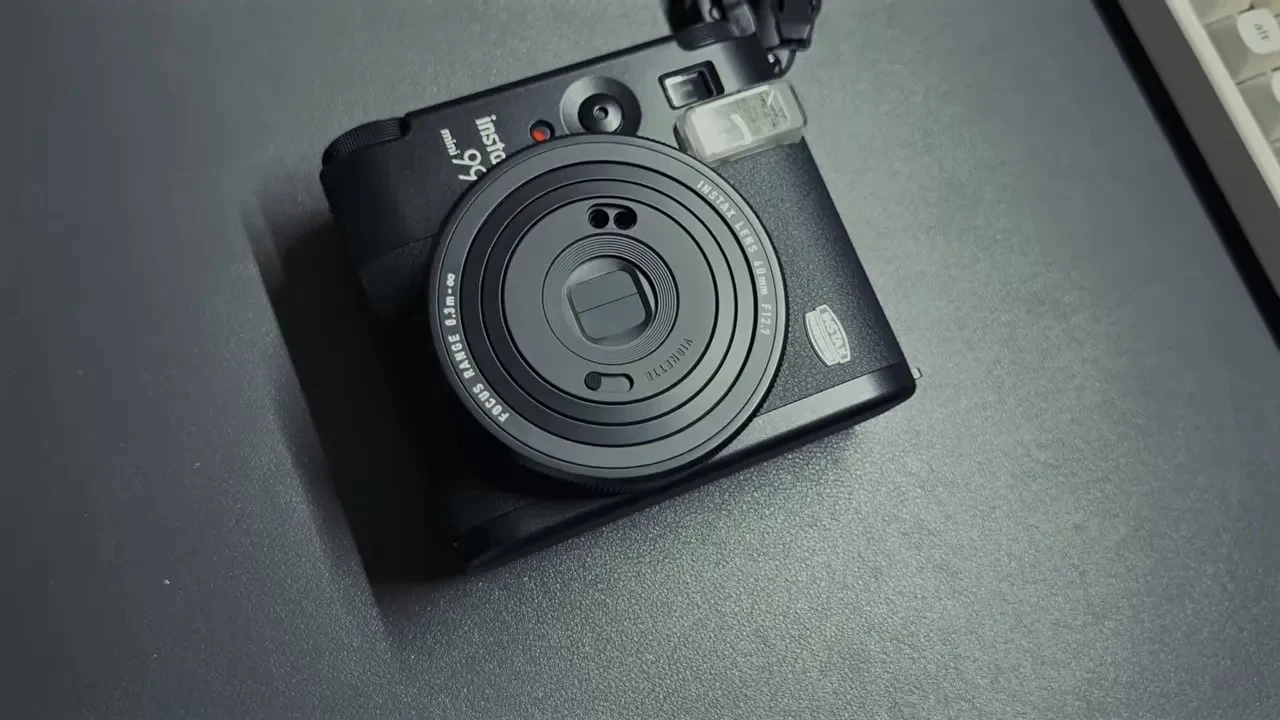
It’s still a plastic camera, so let’s not pretend it’s machined out of titanium or something. But the important part is that it does not feel cheap. It feels solid. The controls are described as clicky and satisfying, and that sort of physical feedback matters a lot in a camera built around tactile fun.
Compared with more basic Instax models like the Mini 11 or Mini 12, the Instax Mini 99 feels like a noticeable upgrade. Those simpler cameras can come off a little toy-like. This one feels more intentional, more refined, and honestly more deserving of its place in a bag.
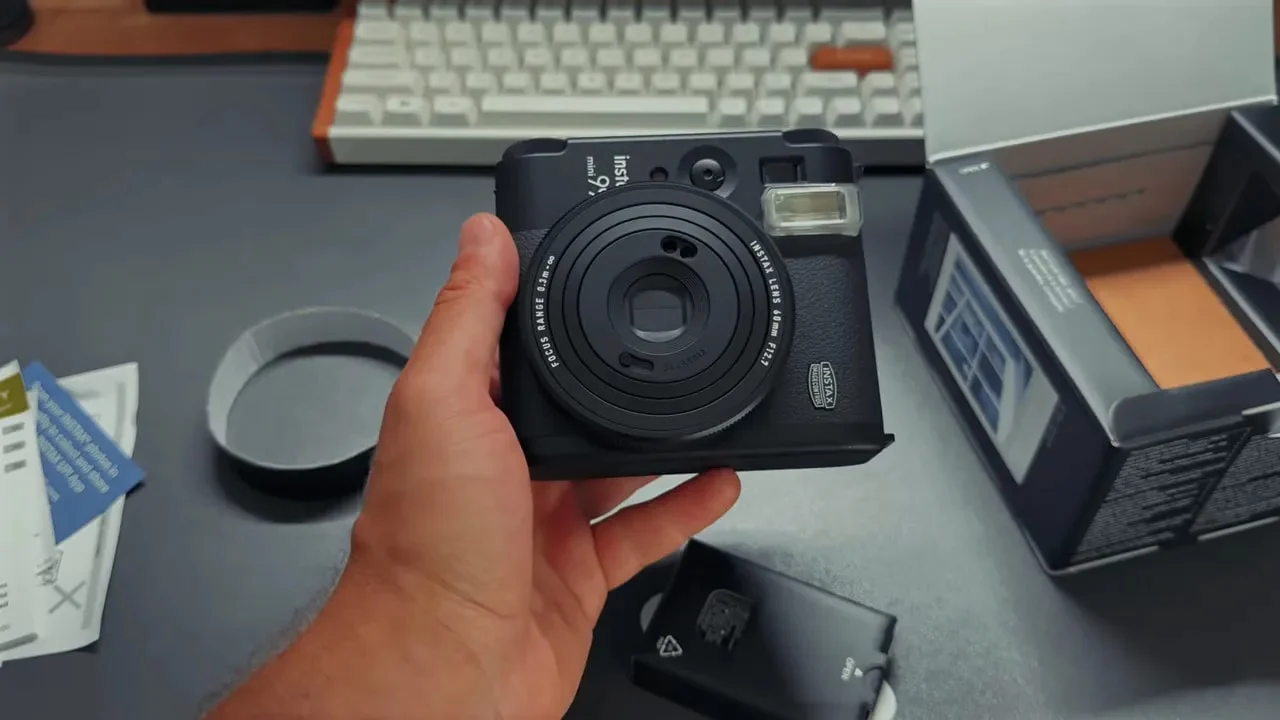
That “solid enough for a backpack” feeling is a big compliment in this category. You still wouldn’t want to abuse it—especially because film is too expensive to be casual about damage—but it does seem built to be used, carried, and enjoyed instead of just displayed.
The design also lands in a nice middle ground. It’s more stylish and serious than entry-level instant cameras, but it still keeps the approachable Instax charm. The result is a camera that looks a bit more grown-up without losing the fun.
If you like practical gadget breakdowns like this, the broader TesovTech blog archive is worth a look too. The same no-hype approach shows up there as well.
How it handles in real use
The Instax Mini 99 seems to hit an important balance in hand: substantial, but not absurd. It’s definitely chunky. No point pretending otherwise. This isn’t a slip-it-into-any-pocket kind of device.
But chunkiness in an instant camera isn’t automatically a flaw. In fact, for something like this, it can add to the experience. A little heft makes the camera feel more planted. More camera-like. More separate from the disposable rhythm of phone photography.
And that’s really the recurring theme here. The Instax Mini 99 is not trying to beat your phone at convenience. It cannot. It will not. That’s not the game.
What it offers instead is intention. You frame a shot, think about the controls, press the shutter, and get a physical print out of the camera. That process is slower, yes. But the slowness is part of the appeal.
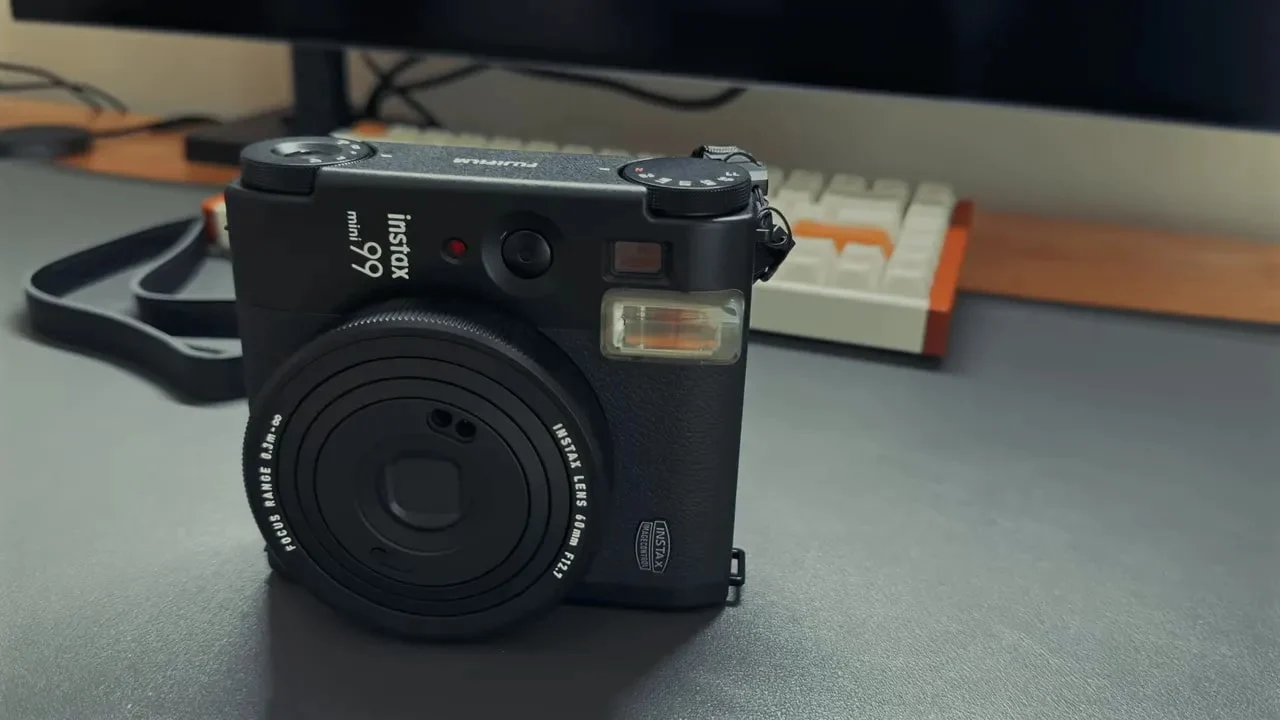
The output ejects from the camera in the classic instant-photo way, which is a huge part of why these devices are still fun in the first place. There’s a little bit of ceremony to every shot. That matters more than spec sheets.
Battery and charging
Since the Instax Mini 99 uses a rechargeable battery, setup includes installing that battery and charging it before proper use. This is one of those details that doesn’t sound exciting, but it does make the overall product feel more premium than battery-powered entry models.
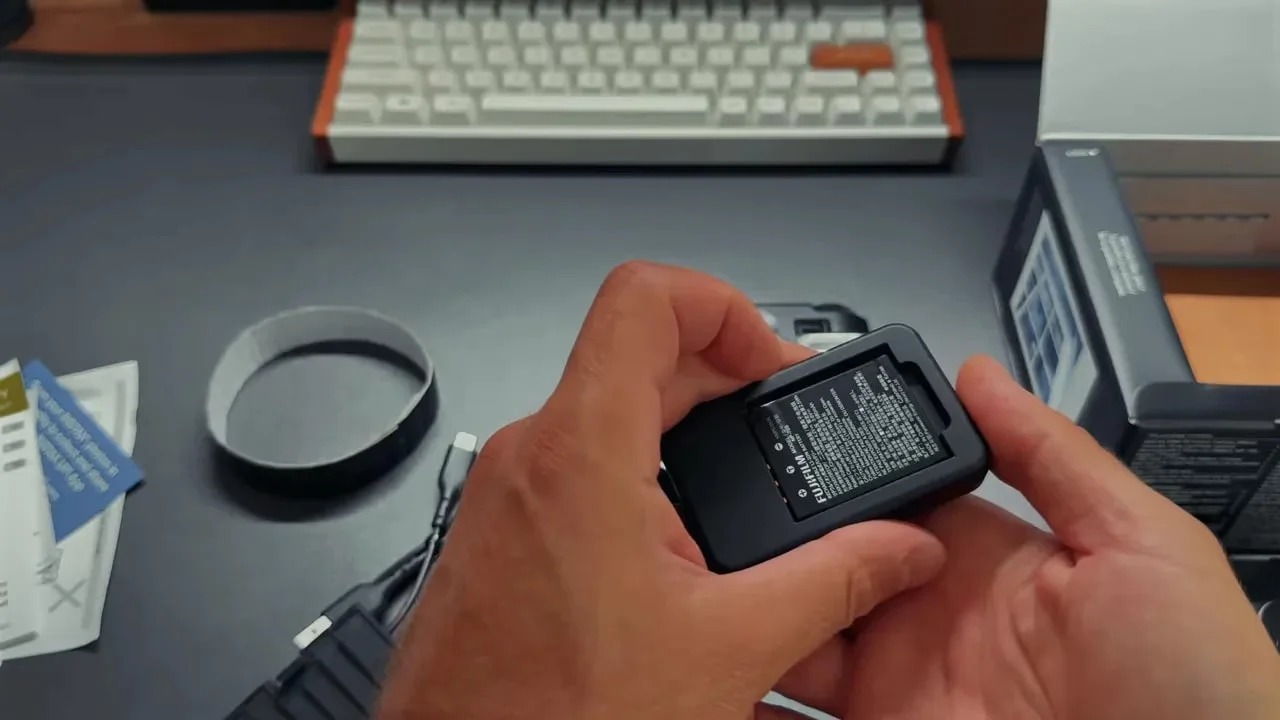
The battery itself is removable, and the charging gear is included. That’s the kind of practical packaging choice you want to see. No weird surprises. No immediate extra purchase required just to get started.
It also reinforces the idea that the Instax Mini 99 sits above the most basic instant options in Fujifilm’s range. Rechargeable power may not be flashy, but it’s a quality-of-life upgrade.
What the sample photos tell you
The sample prints shown with the Instax Mini 99 help clarify what kind of results this camera is aiming for. The important thing isn’t razor-sharp perfection or digital cleanliness. It’s mood. Presence. A little texture. A little soul.
The camera is presented as capable of producing instant photos that feel almost professional in character, which is a pretty interesting compliment for this format. Not professional in the sense of replacing a full camera system, obviously. More like professional in the sense that the images have intention and style rather than looking like cheap novelty prints.
That lines up with the whole product concept. The Instax Mini 99 is for people who want better control over the final aesthetic and who care about how the print feels, not just whether a picture exists.
And yes, there’s still that beautiful instant-photo unpredictability. That’s part of the charm. If your goal is sterile perfection, this is the wrong category entirely.
The price problem is real
Okay, now for the part nobody should gloss over: the cost.
The Instax Mini 99 itself is not exactly cheap, and the real ongoing cost is film. At about a dollar per shot, every photo carries a small but very real price tag. That changes behavior fast.
You become more selective. More careful. Sometimes more creative, because you’re no longer firing endlessly and fixing it later.
That can be a positive or a negative depending on what kind of shooter you are.
If you want unlimited experimentation at zero emotional cost, a phone will always win. If you like the idea of every frame mattering a little more, then the economics of the Instax Mini 99 start making more sense.
For anyone already shopping around, the standard Instax Mini 99 listing and this bundle with accessories are the most directly relevant buying options from the original source links.
Who the Instax Mini 99 is actually for
Not everybody needs the Instax Mini 99. Honestly, a lot of people would be better off with a cheaper Instax model if all they want is quick party snapshots and zero learning curve.
But if you fall into one of these groups, this camera makes a lot more sense:
- You want instant photos with more character and more control
- You care about physical controls more than app connectivity
- You like cameras that feel tactile and satisfying to use
- You’re tired of overprocessed phone-photo aesthetics
- You’re willing to pay for experience, not just efficiency
That last point is the key one. The Instax Mini 99 is not an optimization purchase. It’s an experience purchase. You’re paying for a slower, more hands-on, more memorable way of taking photos.
And in a world where most image-making has become fast, disposable, and weirdly forgettable, that has real value.
The honest verdict
So, is the Instax Mini 99 practical? Not really.
Is it fast? Nope.
Is it cheap to feed with film? Definitely not.
But that’s not the full story, and reducing it to those points would miss why this camera is appealing in the first place.
The Instax Mini 99 seems to nail the stuff that matters for this category: satisfying physical controls, stronger build quality than the lower-end models, thoughtful creative features, rechargeable power, and prints that feel like they have actual personality.
That’s why it comes across as more than a novelty. It feels like Fujifilm made an instant camera for people who still want photography to feel tactile and imperfect in the best way.
If you’re after convenience, keep using your phone. Seriously. It’s better at convenience than anything else.
But if you want tiny printed photos, real-world character, and a camera that feels fun without feeling dumbed down, the Instax Mini 99 looks like a genuinely compelling option.
And honestly? That might be enough.
If you also care about efficient gear for making content around products like this, TesovTech’s Elgato Prompter review is another solid practical read.
Related reviews: Elgato Prompter review and TourBox Lite review.
Instax Mini 99